Amino Acids & BCAAs · 12/06/2026
BCAAs are one of the most sold sports nutrition products. They are also one of the most misused. The timing question has a specific answer.

What BCAAs actually are
Branched-chain amino acids — leucine, isoleucine and valine — are three of the nine essential amino acids. They are called branched-chain because of their molecular structure. What makes them nutritionally distinctive is that they are metabolised primarily in muscle tissue rather than the liver, meaning they can be oxidised as fuel during exercise and can directly stimulate muscle protein synthesis independent of other dietary protein.
The case against taking BCAAs after training
The post-workout window argument for BCAAs holds up only if you are training in a fasted state or have not consumed adequate protein in the preceding 3 to 4 hours. If you have eaten a protein-containing meal within that window, your bloodstream is already well-supplied with amino acids and additional BCAAs add little. The argument for post-workout BCAAs was built on fasted training research and inappropriately generalised.
When the timing argument actually has merit
The strongest case for BCAA supplementation is intra-workout, during fasted morning training, or in the period immediately before training on low-protein days. Intra-workout BCAAs reduce muscle protein breakdown during the session by providing an alternative amino acid substrate for energy, sparing muscle tissue. For sessions exceeding 90 minutes, intra-workout amino acids have a measurable anti-catabolic effect.
The ratio debate: 2:1:1 vs 4:1:1
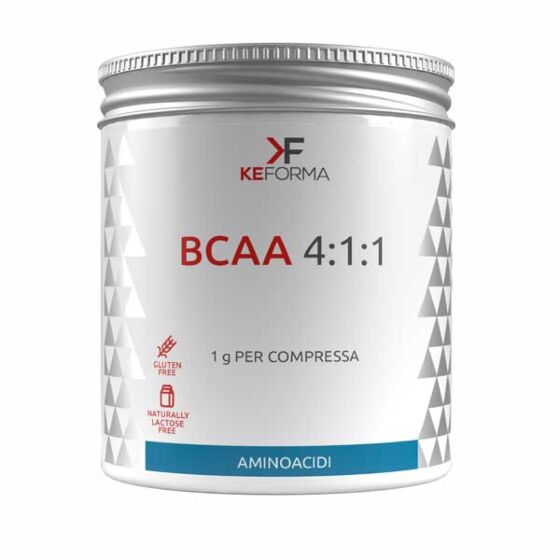
Standard BCAA products use a 2:1:1 ratio of leucine to isoleucine to valine. Products claiming superiority at 4:1:1 or higher leucine ratios are built on the correct observation that leucine is the primary mTOR activator — but the evidence that this translates to greater muscle gain versus 2:1:1 is thin. A 4:1:1 ratio like Keforma's BCAA 4:1:1 formula is a reasonable, leucine-weighted option for athletes focused on muscle protein synthesis signalling.
BCAAs vs whole protein: the honest comparison
Gram for gram, a complete protein source stimulates greater muscle protein synthesis than BCAAs alone, because full-spectrum essential amino acids provide the building blocks that BCAAs cannot. The advantage of isolated BCAAs is speed, convenience and low caloric density — useful during training or when full protein intake is impractical. For meal replacement or primary post-workout nutrition, whole protein is superior.
The fasted training use case
If you train fasted — before breakfast, before your first meal — BCAAs have the clearest evidence base. They attenuate muscle protein breakdown, provide a small energy substrate, and keep leucine levels sufficient to prevent muscle catabolism without breaking the fast in a calorically meaningful way. 5 to 10 grams taken immediately before fasted training is the most evidence-supported application.
How to build a sensible protocol
BCAAs are not magic. They are a useful tool for specific scenarios: fasted training, extended sessions, periods of caloric restriction, or days where food timing makes adequate protein intake difficult. Outside these contexts, spending the same money on a quality complete protein source delivers a greater return. The mistake is treating BCAAs as a daily default rather than a targeted solution.


Comments
Be the first to comment.
Log in to participate