Proteins & Recovery · 12/06/2026
The aggressive bulk you could manage at 22 is a different equation at 38. The biology has changed. The strategy needs to match.

Why the aggressive bulk stops working
The classic bulk — a 500 to 700 calorie daily surplus combined with high training volume — is predicated on youthful hormonal conditions: high testosterone, high growth hormone, high insulin sensitivity, and a fast metabolic rate. After 35, all of these markers have declined to varying degrees. The result is that a large surplus produces more fat gain relative to muscle gain than it did at 22, and the fat is preferentially deposited centrally — around the abdomen — where it is both harder to lose and more metabolically harmful.
The lean bulk: the alternative that holds up
A smaller surplus — 150 to 250 calories above maintenance — combined with high protein intake produces a slower but more efficient muscle gain pattern in adults over 35. The muscle-to-fat gain ratio is significantly better, the surplus is small enough that insulin sensitivity is not chronically stressed, and the body composition progress is more linear and less dependent on a subsequent aggressive cut. This is the protocol that experienced athletes in their late 30s and 40s consistently report working.
Protein: the variable that matters most after 35
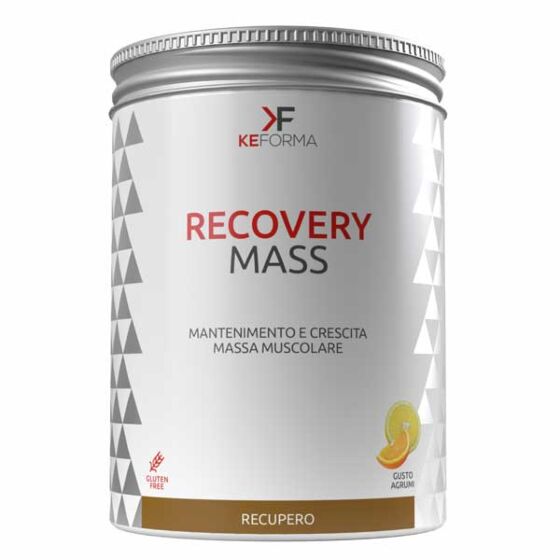
Anabolic resistance increases with age — the muscle protein synthesis response per gram of protein consumed declines, requiring higher intakes to produce the same anabolic signal. Research places optimal intakes for mass-building in adults over 35 at 2.0 to 2.4g/kg of bodyweight. Distributing this across four meals with a protein-rich pre-sleep meal is the practical implementation. Meeting these targets through food alone becomes logistically demanding, which is where a calorie-controlled supplement with a solid protein and carbohydrate matrix — like Keforma's Recovery Mass 2.0 — provides consistent utility around training.
Caloric density vs caloric excess
The logic of mass gainers is sound: high-intensity training with insufficient caloric support does not produce muscle gain. The challenge is managing the surplus precisely enough to avoid excessive fat gain. A recovery formula with a defined macro profile is easier to integrate into a calorie-controlled lean bulk than estimating from varied whole foods. The calorically dense options designed for younger athletes in aggressive surpluses are less appropriate — the 150 to 250 calorie target surplus requires precision, not bulk.
Training frequency and intensity: the revised equation
After 35, the optimal training frequency for hypertrophy shifts. Research on older adults finds that training each muscle group twice per week produces similar or better hypertrophy outcomes than three times per week, because recovery between sessions is slower. Intensity — the load on the bar relative to maximum — remains essential for maintaining the mechanical tension stimulus. Volume can be modulated; intensity cannot be compromised without compromising the signal.
Joint health: the constraint that determines longevity
The limiting factor in training over 35 is usually not muscular capacity — it is joint and connective tissue health. Tendons and ligaments adapt more slowly than muscles to training loads and are more prone to overuse injury in athletes pushing volume or intensity too aggressively. Programming that includes adequate warm-up, joint-friendly exercise selection, and planned deload weeks protects the connective tissue that training longevity depends on.
The long game: reframing success metrics
The athletes who maintain impressive physiques into their 40s and 50s are not those who trained hardest in their youth — they are those who trained consistently, intelligently and without major injury interruptions. Monthly progress measured in 0.5 to 1kg of lean mass gain, sustained without fat gain or injury, compounds into transformative change over 3 to 5 years. The impatient approach — big surpluses, maximum volume, no deloads — produces faster short-term scale movement and worse long-term outcomes.


Comments
Be the first to comment.
Log in to participate